Tuesday, November 24, 2009

Tuscany in November


November in Tuscany

November is a strange month, in which the olive harvest time ends the season of fields bedecked with flowers and the calendar gives way to the cold winter months when the land is bathed in those shades of black and dark brown blending with green country landscapes and leafless trees.

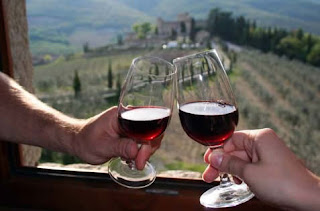
The scenery of Tuscany in November turns in what the English call “Dramatic Beauty” but without losing its magic and singular beauty. In a trip in November there are many things to relish such as the scenery shrouded in stunning morning mist and dinner based on white truffle, cep mushrooms and “novella” wine in restaurants.

November is also a month to taste the world renowned Tuscan oil which can also be relished in this season in all its splendour. In this season most regarded restaurants prepare the bruschetta (toasted handmade bread) with oil and garlic. The recently produced oil has a bright green colour and an intense almost sharp flavour that dilute immediately, reason why it has to be savoured “in situ”.

A visit to Florence and the main art towns is also a “gift from gods” as in this time of year there are fewer tourists visiting our pretty land and the flights tend to be cheaper. For example Ryan Air offers flights to Pisa at really low prices.

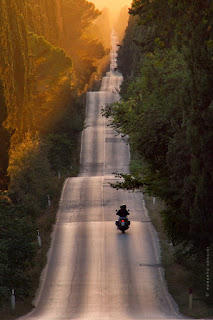
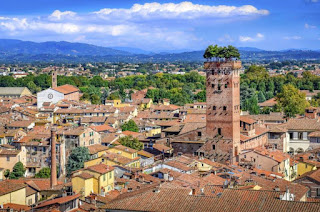
Take your time to indulge in this photograph set of Tuscany in November.

A hug for all of you,

Giovanni


Friday, October 16, 2009

Tuscan Tabaco


Hallo!

Here you have some pictures I took few days ago in a Tuscan Tabaco plantation few km from the beautiful town of Cortona.

Tuscany is one of the biggest italian tabaco producers and its cigars are famouse all over the world.

For more information on it you can visit teh official website: http://www.sigarotoscano.it/


Best regards

Giovanni

Thursday, October 01, 2009

Traditional harvest in Tuscany

Hallo my firends

I want to share with you some beautiful pictures of Tuscany I made last weekend while I was helping my friend Riccardo Berna during harvest.

Enjoy these pictures because all of them have the essence of The traditional harvest in Tuscany.

My best regards

Giovanni


Tuesday, September 15, 2009

Empoli in the Middle Ages,the city that saved Florence from its destruction.


Empoli is a very beautiful, lively, rich and interesting city. It is located on the left bank of the river Arno, around 30 Km. to the southwest of Florence.
At the time when the Etruscans inhabited the area, the town was already well known for its splendid crystal handcrafts production used by artists and goldsmiths and silversmiths in this amazing manufacture of works of art and jewels. When the Romans conquered this territory, Empoli, at that time called Emporium, the city not only continued producing its famous glass, but being located between the Via Quinctia and the Via Salaiola, which connected the city with the most important Roman cities of the time such as Florence, Fiesole, Pisa and Volterra, it also tuned into a commercial city, strategically situated among other fundamental production centers, thing which made barter and the transportation of goods necessarily pass through the already highly prosperous Emporium.

At the beginning of the XII century the city turned into a feud of the Counts of Guidi, who surrounded it with walls and defensive constructions and turned it into practically an impregnable fortress. Due to its crucial strategic position, it was the object of greediness of the Republic of Florence for many decades. After various attemps of capturing it, in 1182, it forced the Counts of Guidi to swear loyalty to Florence. In this way, by mid XIII century, the Florentines obliged the Counts of Guidi to sell them the feud for the price that Florence had established.

Empoli, of long Ghibelline tradition, contrary to Florence, at that moment ruled by the Guelphs, was the venue of the famous Ghibelline Council of Empoli, which was held on Septiembre, 1260, soon after the defeat of Florence at the famous Batalla de Monteaperti, fought in the territorial area of Empoli. The person who lead the defeat was Manente degli Uberti, better known as "Farinata", who was in charge of the Ghibelline troops of Siena and Pisa (loyal to the Emperor) against the extremely powerful forces of Florence(the Pope followers). Manente degli Uberti, regarded as one of the best military men of the Tuscan territory in those times and a very well educated person of an impeccable loyalty towards the Ghibeline faction, belonged to one of the most notable families of the Ghibeline aristocracy in Florence, who had suffered a terrible persecution by the Guelphs.

The Council, now an assembly composed of the main Ghibeline representatives, unanimously voted in favor of the destruction of Florence, not only as a revenge against the traditional Guelphs’ attacks on the Ghibelines’ property or on their lives, but to make sure that by nipping their huge power in the bud those atrocities would no longer happen in the future.

But, Manente o Farinata degli Uberti, as you prefer to call him, pronounced himself against this decision, and unsheathing his sword he swore that, as long as he was alive, he would continue defending Florence (which he had seen in its origins and was now defeated) from such a vile resolution with the same courage and loyalty with which he had defended the Ghibeline cause, as long as he was alive.

And that’s how Florence was saved from being burnt to the ground.

As it was to be expected, once established the Guelph rule, Florence not only forgot it owed Farinata its life and its resurgence, but it snatched away all his family’s properties, who had to go into exile and leave the city without complaining.

Besides, the Florentine authorities accused "Farinata" of heresy, basing themselves on the fact that he had manifested that the Pope should not interfere in the power of the Emperor. Manente degli Uberti had to ask Siena for asylum, which was immediately granted to him in order to save his wife and daughter.
"Farinata" lived and died as the gentleman he had always been, giving a colossal example of generosity and coherence with his high sense of ethics.

However, not only the citizens of Empoli, but historians too keep on asking themselves how different Empoli would’ve been if the historical decision of the Ghibeline Council had been kept because if Florence had vanished from the face of the world, which would have been the capital of the future Tuscany?
The same hypothetical question goes to you after visiting the emblematic Empoli and plunging a bit into its fascinating story, which of course does not finish in the Middle Ages and continues and continues with episodes of fights and resistance, each time more significant and impressive.

Sylvia.

Tuesday, September 08, 2009

Livorno: a different city


Livorno, the second city in Tuscany as regards population density, is situated twenty kilometers away from Pisa and it is connected to it by means of a navigable canal. It is a peculiar city, whose structure, architecture and atmosphere have nothing to do with the rest of the capitals in the province of Tuscany. It changed from being a small port serving the Marine Republic of Pisa to becoming the Tuscan port, which is nowadays the third most important port in Italy after those in Geneva and Naples.
The Medicis decided to turn Livorno into a perfect city, whose social life, economic development and architecture were at the level of that impressive port, emblematic because of the fortifications which protected it, and whose commercial and military activity were going to produce great economic benefits to Tuscany, besides protecting its coasts from enemies’ attacks and mainly from the recurrent raids of Ottoman pirates.

So, just like that, as if out of the blue, appeared a splendid city, whose developing neighborhoods started to connect with the center by means of navigable canals, turning into a small and peculiar “Venice” to the whole of Italy’s amazement. Livorno could be considered a city which had been marvelously invented in the late Renaissance. Therefore, the best of its urban layout and its architecture starts with designs and monuments with clear cuts and mannerism character, successively passing from the baroque, to the rococo, to the neo classical style, to finally delight us with a Belle Epoque and Art Noveau architecture, which is mainly present in the marvelous promenade seafront and the areas adjacent to it, impregnating the city with a lyrical and nostalgic atmosphere.

In general terms, I guess you must have got the picture of what Livorno is like, but, its external aspect, in spite of being as fascinating as particular, is not the only thing that denotes the true idiosyncrasy of the city as it bases itself on the historical universality of the city, thing which would not be surprising in nowadays Europe, but we are talking about the late XVI century, when thanks to the Constitution of Livorno, enacted by Ferdinando I de Medici, Duque of Tuscany at the time, the doors of the city opened up to everyone who wanted to live in the city and to work there together with their families no matter their race, country of origin or religious belief. The Constitution offered full rights Tuscan citizenship, religious freedom and the indult of any crime they had been previously condemned of in their country of origin, as from then on Livorno would be ruled by local criminal and civil laws, regulated by their own courts, independent from those of the Grand Duchy.
Thus, the city became a new and true home to thousands of sailors, artisans, merchants and other workers, who found there the freedom and well being their countries of origin deprived them from.

People came from all over Italy, which, at that time, was completely fragmented and subjugated by the different local governments of Greece, Armenia, the east of Europe, the Middle East; and so did hordes of Jews and Muslims, who were forced to go into exile because of terrible religious persecutions. The same thing happened with the Catholics from the most diverse social classes and intellectual backgrounds, who arrived from England, Holland, Germany and some places in France to be able to live in freedom according to their beliefs.

They not only lived together peacefully sharing the same neighborhoods and places, but each community started to establish their own churches, cemeteries; and the Jews, who called Livorno the "new promised land", built temples, schools, a university, a museum and different cultural establishments. Working all together, side by side, they turned Livorno into a rich city, which at the beginning of XVII century was already “porto franco”, recognized as such by an international treaty.

Those stateless people, either by choice or forced to become so, exchanged, languages, customs and gastronomy giving birth to a singular language, or local dialect, which still runs, and in which they could understand each other perfectly well, despite their mother tongue. It was also as from that moment that the gastronomy of Livorno, considered in Italy as one of the best in the country, experienced an amazing development, both in quantity as in quality, as the recipes from one and other started to circulate all round the city, and to become adopted by the other cultures as their own. Nowadays you can indulge in the exquisite Mediterranean cuisine and savor the famous "cacciuco", a superb fish and seafood stew, accompanied with pieces of toasted bread with garlic and olive oil, as well as in the refined "cuscussĂș", a Jewish variety of the traditional "cous-cous", or enjoy many other dishes and extraordinary desserts from the most diverse countries, which are only properly stewed and served in Livorno.

You can’t miss Livorno. I can assure you visiting Livorno is a unique experience.

On the other hand, I can’t stop thinking about how convenient it would be for those who make and enact the current immigration laws to learn a little from the sensible and generous Ferdinando I de Medici. Deep inside, many of them would feel ashamed of their short intelligence and meanness, and maybe, some would change their ultra-conservative conduct, which only leads to confrontations and impoverishment.

Sylvia